
Last updated October 16, 2026
 Wrought iron
 Wood & steel frame
 Farm & ranch
 Sliding driveway gates
 LiftMaster operators
Free on-site gate assessment - hinges, posts, and your LiftMaster or Nice gate operator checked before anything is quoted
The assessment is free and the quote is the invoice.
Get your free estimateSeasonal Gate Repair Care for Los Angeles: Year-Round Homeowner’s Guide
The single worst month for gate opener failures in Los Angeles isn’t January, and it isn’t July. It’s October, when the first Santa Ana wind events dump leaves, twigs, and fine grit into drive systems that haven’t been cleaned since the last rain in April. Homeowners who think of gate maintenance as a once-a-year chore get caught by this every fall. This guide maps the real stress cycles that damage gates across Los Angeles, and builds a maintenance rhythm around them, not around a four-season calendar borrowed from somewhere else.
Styles & brands we work with
Quick Answer
Seasonal gate care in Los Angeles means cleaning debris from slide tracks and pivot arms before and after Santa Ana wind events, checking opener motor housings before El Niño rains, and lubricating moving parts every three to four months with a product rated for Southern California’s temperature range. Most Los Angeles homeowners without gate experience should plan on two professional inspections per year, timed for late spring and mid-fall.
Table of Contents
- The Four Actual LA Stress Seasons That Damage Gates
- Post-Santa Ana Wind Checklist: What to Inspect Within 48 Hours
- El Niño Years: Pre-Treating Your Gate Before Heavy Rain
- Wildfire Smoke and Ash: How It Kills Gate Opener Motors
- Year-Round Lubrication Schedule for LA’s Temperature Range
- Marine Layer Season (May – June): The Creeping Rust Problem
- Summer Heat Peaks (July – September): Expanding Metal and Strained Motors
- Common Mistakes to Avoid
- When to Call a Professional
- Frequently Asked Questions
- The Bottom Line
The Four Actual LA Stress Seasons That Damage Gates
Los Angeles doesn’t have winter, spring, summer, and fall the way a weatherperson in Chicago would describe them. What it has is four distinct stress periods that each attack gate hardware in a different way. Understanding these cycles matters more than any generic maintenance calendar because the fixes are different for each one.
Marine layer season (May through June) brings weeks of low clouds and damp air, especially to neighborhoods west of the 405 like Westchester, Mar Vista, and Playa del Rey. Gates in these areas, particularly swing gates with exposed pivot arms, absorb moisture into bearings and hinge points. We’ve opened gate hinges in mid-June in coastal Los Angeles neighborhoods and found surface rust starting on components that were clean in March. The marine layer isn’t rain, so homeowners don’t think about it, but it’s slow, persistent moisture exposure for eight to ten weeks.
Summer heat peaks (July through September) put a different load on the system. On days when the San Fernando Valley hits 105 degrees, the metal in gate frames and tracks expands measurably. A slide gate that glides smoothly at 75 degrees can bind at 100 because the track has lengthened and the gap tolerances have shifted. Meanwhile, opener motors in direct sun, especially dark-colored housing units mounted on south-facing pedestals, run hotter than their design spec. Heat-related capacitor failures and thermal overload trips spike in August and September in Los Angeles.
Santa Ana and fire season (October through November) is the most damaging period for gate hardware in Los Angeles County. Sustained winds of 25 to 40 miles per hour with gusts to 60 or more push dry leaves, palm fronds, eucalyptus bark, and fine dust into every opening in a gate system. The debris doesn’t just sit there. It works its way into slide track grooves, wraps around pivot arms, and gets pulled into opener belt pulleys. This is also when the air is driest, which means any existing lubricant has thinned or evaporated, leaving metal-on-metal contact points unprotected.
El Niño wet season (December through March) delivers the opposite problem: water. In wet years, Los Angeles can receive most of its annual rainfall in eight to ten weeks. Water intrusion into opener motor housings, control boards, and limit switch enclosures causes corrosion, short circuits, and intermittent failures that show up weeks after the rain stops. Poorly sealed conduit connections and cracked gaskets are the usual entry points.
Each of these four periods has a specific maintenance response, covered in the sections below. The common thread is that cleaning and inspection happen before the stress peaks, not after the damage is done.
Post-Santa Ana Wind Checklist: What to Inspect Within 48 Hours
After a Santa Ana event blows through Los Angeles, most homeowners check their patio furniture and maybe their roof tiles. Gates are an afterthought until the opener starts grinding. Here’s the inspection sequence we recommend after any wind event with gusts above 25 miles per hour.
- Clear the full slide track groove first. Use a flathead screwdriver or a shop vacuum with a crevice tool to remove everything packed into the track. Pay attention to the last 12 inches at each end, where debris gets compacted by the gate wheels. A track that looks clean from above can still have packed material below the wheel line.
- Check swing gate pivot arms and hinge bolts. Wind pushes against the gate’s surface area, which torques the pivot points. Look for fresh play in the hinge bolts, bent pivot arms, and any shiny metal where a bolt has started backing out. If you can rock the gate more than a quarter inch by hand at the latch end, the hinges need tightening or replacement.
- Inspect the opener belt or chain for wrapped debris. Palm frond fibers and long strands of bougainvillea wrap around drive pulleys during high wind. Run the gate through one full cycle and listen for a rhythmic clicking or rubbing sound.
- Test the limit switches. Wind events can knock gates slightly out of alignment, which causes the gate to overshoot or undershoot its stop point. If your gate now bangs into the end stop or stops two inches short, the limit switch is out of adjustment. This is the small sensor that tells the gate when to stop.
- Check the photo eye sensors. Dust and debris on the lens will cause the gate to refuse to close, or to reverse mid-cycle. Wipe both lenses with a dry microfiber cloth.
- Re-lubricate contact points. Santa Ana air is extremely dry and moving fast, which strips lubricant from exposed hinge pins and track rollers. A light application of white lithium grease on hinge points and a dry silicone spray on track rollers restores the barrier before metal-on-metal wear starts.
For slide gates specifically, the debris intrusion points that fail after Los Angeles wind events are the end caps of the track, the guide rollers at the top of the gate frame, and the gap between the gate panel and the motor post. For swing gates, it’s the pivot arm connection at the motor and the hinge brackets mounted to the column. These are the places where a fouled system first shows signs of strain: slower cycle times, a change in motor pitch, or a gate that shudders at start-up.
El Niño Years: Pre-Treating Your Gate Before Heavy Rain
El Niño years in Los Angeles change the gate maintenance schedule because the threat model flips from dry and dusty to wet and penetrating. The difference matters: most gate opener failures from water take days or weeks to appear, because corrosion and short circuits develop gradually after the moisture gets inside.
Before a forecasted wet period, here’s what to do:
- Re-seal conduit entry points. The flexible conduit that carries low-voltage wiring from the opener to the keypad, safety sensors, and the motor itself has entry points where it enters junction boxes. These points often have degraded gaskets or loose compression fittings on gates installed more than five years ago. A tube of exterior-grade silicone caulk, applied around each entry point, is a $12 fix that prevents a $400 control board replacement.
- Check the motor housing gasket. Openers from brands like LiftMaster and FAAC use a gasket seal between the motor housing and the cover plate. On units exposed to direct sun, that gasket can dry out and crack. Press a finger into the gasket, and if it feels rigid or shows visible cracks, it’s not sealing anymore. Replacements are available for most major brands.
- Clear drainage paths around the gate. Water that pools at the base of a slide gate motor post will find its way in. Make sure the ground around the post is graded so water runs away, and clear any built-up leaves or mulch that blocks drainage.
- Test the gate after the first heavy rain. Run it through three full cycles. Listen for a change in motor hum, watch for hesitation at start-up, and check whether the auto-reverse safety function triggers correctly.
In wet El Niño years, we see a pattern in Los Angeles: gate failures cluster in February and March, weeks after the heaviest rain has passed. Homeowners think the gate made it through the storm fine, but moisture that seeped into the control board is slowly corroding contacts. The failure arrives on a dry day, which never makes sense until you open the housing and find the evidence.
Wildfire Smoke and Ash: How It Kills Gate Opener Motors
Los Angeles wildfire smoke carries fine particulate matter, and that ash is not just a lung irritant. It’s abrasive, slightly acidic, and small enough to enter unsealed motor housings through ventilation gaps and wire routing holes. Over the course of a fire season, that ash accumulates inside the opener motor, where it does two things: it increases friction on rotating parts, and it holds moisture against electrical components.
Brand matters more here than in any other maintenance scenario. Some opener motors are built with sealed housings, and some are not.
- LiftMaster residential and light-commercial openers generally use sealed motor housings with internal cooling, which gives them meaningful protection against ash intrusion. The trade-off is that they’re less forgiving of heat buildup on very hot days, since the sealed design limits airflow.
- FAAC swing gate operators, particularly the hydraulic models common in Los Angeles hillside neighborhoods, are built with vents for heat dissipation. That design handles the heat better but admits more particulate matter during fire season.
- Mighty Mule and other battery-powered, solar-compatible openers typically have open-frame motors in plastic housings with slot vents. These are the most vulnerable to ash accumulation because the vents are large enough for visible debris to enter.
- BFT operators sit somewhere in the middle, with partial sealing that varies by model. If you own a BFT unit, or any brand with visible ventilation slots, assume ash can get in.
After a significant smoke event, open the motor housing (with the unit unplugged or the breaker off) and use compressed air to blow out accumulated dust and ash. If the accumulation is heavy, a professional cleaning is worth the money because ash that’s been inside the motor for weeks tends to work into bearings and brushes, where it causes premature wear that isn’t visible until the motor fails.
For homeowners in fire-adjacent zones, the foothills along the 210 corridor from La Cañada Flintridge to Pasadena, and the hillside neighborhoods on both sides of the Sepulveda Pass, ash intrusion is an annual event, not an occasional one. If your gate is in one of these areas, make post-fire-season motor cleaning part of your fall routine.
Year-Round Lubrication Schedule for LA’s Temperature Range
A lubrication schedule for a gate in Los Angeles doesn’t need to account for freeze-thaw cycles or road salt. That’s the good news. The challenge instead is that LA’s temperature swings, from 45-degree winter nights in the Valley to 105-degree summer days in the same week, thin out the wrong lubricants quickly and leave metal exposed when the dry Santa Ana winds arrive.
The rule we apply to gates in Los Angeles is this: lubricate every three to four months, and use different products for different components.
- Slide gate track rollers and guide rollers: dry silicone spray, applied every three months. It doesn’t attract dust the way grease does, which matters in a city where fine particulate is always in the air. Avoid WD-40 as a lubricant. It’s a solvent and water displacer, not a long-term lubricant.
- Swing gate hinge pins and pivot points: white lithium grease, applied every four months. This is the heaviest-wearing point on any swing gate, and the grease needs to stay in place through wind events and heat spikes.
- Opener chain or belt: most belt drives are self-lubricating and need no added product. Chain drives should get a light application of chain-specific lubricant twice a year. Over-lubricating a chain is worse than under-lubricating because excess product flings off and accumulates as a dirt magnet.
- Limit switch contact points: no lubrication. These are electrical components. Keep them clean and dry.
- Lock hardware and keypad hinges: graphite powder once a year. Liquid lubricants in locks attract dust and eventually gum up the mechanism.
If you live within three miles of the ocean, in Santa Monica, Venice, Marina del Rey, or the Palisades, add a fourth item to the list: a corrosion inhibitor for exposed metal parts. The salt air adds a rust factor that inland neighborhoods don’t deal with. Products like Boeshield T-9, applied to hinge brackets and exposed motor mounts twice a year, make a measurable difference in component lifespan in coastal Los Angeles.
Marine Layer Season (May – June): The Creeping Rust Problem
Marine layer season is the most overlooked maintenance period in Los Angeles because nothing dramatic happens. There’s no wind, no rain, no heat wave. Just gray mornings and damp air that burns off by noon.
But the marine layer delivers something no other LA season does: consistent, recurring condensation. The moisture cycle, wet at night and early morning, dry by afternoon, repeated for six to eight weeks, accelerates oxidation on any exposed metal surface, especially on gates within five miles of the coast.
What to check during May and June:
- Rust on hinge brackets and pivot arms. Surface rust on a swing gate pivot arm is normal after several marine layer seasons, and it’s a wear item, not an emergency. But if the rust has advanced to pitting or if metal flakes come off when you scrape it, the structural integrity is compromised and the arm should be replaced before it fails under load.
- Corrosion on electrical connections. Spade connectors and screw terminals on the control board corrode faster in marine air. If connections look dull gray or green instead of bright copper, have them cleaned and treated with dielectric grease.
- Gate panel finish. Wrought iron and steel gates in coastal Los Angeles neighborhoods need rust treatment and repainting on a rotating basis. A small rust spot in May becomes a visible rust streak by September, and a structural problem within two or three years.
Homeowners in West LA, Culver City, and the beach cities should plan for a late-May inspection focused on rust and corrosion, even if the gate is functioning normally. The goal is to catch oxidation while it’s still a cosmetic issue, not a structural one.
Summer Heat Peaks (July – September): Expanding Metal and Strained Motors
Los Angeles summer heat doesn’t just make gate motors work harder. It changes the physical dimensions of the gate itself. Steel and aluminum expand when heated, and the rate of expansion is enough to measurably alter the clearance between a slide gate and its track, or between a swing gate leaf and its frame.
The specific failure patterns we see in Los Angeles during July through September:
- Binding slide gates. A gate that operated smoothly in April suddenly scrapes or judders along the track in August. The track has expanded, the gate frame has expanded, and the clearance that was fine at 70 degrees is gone at 102. Fixing this is usually a matter of adjusting the guide rollers and checking whether the track mounted to the concrete has shifted.
- Thermal overload trips. Opener motors have internal thermal protection that shuts the unit down if it overheats. A motor in direct sun on a 100-degree day is already near its thermal limit before it starts moving the gate. Add a gate that’s binding because the track is hot, and the motor trips mid-cycle. When this happens, the gate stops halfway and won’t respond until the motor cools down, which can take 30 minutes or more.
- Capacitor failures. Start capacitors, the components that give the motor its initial electrical kick, degrade faster in high heat. When a capacitor fails, the motor hums but doesn’t move the gate. It’s a common call in August and September, and it’s usually a quick, affordable fix.
For homeowners in the San Fernando Valley, Burbank, Glendale, and Pasadena, where summer highs routinely exceed 95 degrees, one preventative step helps more than any other: shade the motor housing. A simple awning, a strategically placed shade sail, or even orienting the gate so the motor sits on the north side of the opening, reduces the direct sun load and extends the life of every electrical component inside.
Common Mistakes to Avoid
- Using WD-40 as a gate lubricant. It’s a solvent and water displacer. It cleans, it doesn’t lubricate, and it strips away whatever real lubricant was there before. Two weeks after a WD-40 application, the gate metal is drier than it was before.
- Ignoring a gate that’s 10% slower than it used to be. A gate that cycles slower in Los Angeles is telling you something: debris in the track, a failing capacitor, worn rollers, or a motor losing efficiency. Waiting until it stops entirely turns a $150 repair into a $600 one.
- Power-washing the gate and motor area without sealing the electronics first. A pressure washer aimed at a motor housing forces water past gaskets that were never designed for that kind of pressure. Water in the control board is one of the most expensive, most preventable gate failures in Los Angeles.
- Lubricating the limit switch. Any lubricant on an electrical contact point attracts dust and causes intermittent failures. Keep limit switches dry and clean, nothing else.
- Treating Santa Ana season and rain season with the same maintenance routine. One is about dry debris and lubricant stripping. The other is about water intrusion and corrosion. A checklist for one misses the risks of the other.
- Deferring rust treatment on coastal gates. Surface rust on a hinge bracket in March is a two-hour repair. By the time the bracket has pitted and weakened, which in a marine layer environment can happen in under two years, it’s a structural hazard and a much bigger job.
- Assuming the gate is fine because it looks clean. Hidden failure points, limit switches, motor capacitors, control board terminals, don’t announce themselves visually. A gate that looks fine can be one thermal overload away from failing on the hottest day of the year.
When to Call a Professional
A gate that’s making a new noise, moving slower than it used to, or failing to complete its cycle is already damaged. The question is whether the damage is minor or whether running it further will cause a cascading failure that costs significantly more to fix. Limit switch issues, motor capacitor failures, and control board corrosion are all problems that get worse with continued operation, and none of them are visible to a homeowner without opener training. Calder Gate Repair Los Angeles offers our Gate Repair services with free estimates across Los Angeles, and every job includes a written price before work starts, a written guarantee, and a free second visit if the repair fails within 365 days. Call (213) 322-1415 if the gate is binding, grinding, tripping breakers, or refusing to close all the way.
Frequently Asked Questions
A seasonal inspection and tune-up for a residential gate in Los Angeles typically runs $95 to $180, depending on gate type, opener brand, and whether any lubrication or minor adjustments are needed. Parts like replacement gaskets, limit switches, or capacitors are quoted separately before any work is done. Call (213) 322-1415 for a free estimate, and we’ll give you a written number before touching the gate.
Lubricate slide gate rollers and swing gate hinges every three to four months, using dry silicone spray for track components and white lithium grease for hinge pins and pivot arms. In coastal neighborhoods, add a corrosion inhibitor application twice a year. In the dry Santa Ana season, lubrication breaks down faster, so an October application is non-negotiable.
It’s real, and it’s measurable. Sustained 30-to-40-mile-per-hour winds pack palm fronds, eucalyptus bark, and fine dust into slide track grooves and around pivot arms. Thrashing vegetation wraps around drive chains and belts. The damage pattern is so consistent that October and November are the busiest gate repair months in Los Angeles year after year.
Seal conduit entry points with exterior silicone caulk, check the motor housing gasket for cracks, clear drainage around the motor post, and run the gate through several full cycles after the first heavy rain. Water intrusion into a control board can take weeks to cause a failure, so an inspection after the rain is as important as preparation before it.
FAAC hydraulic swing gate operators handle heat well because their design tolerates high temperatures without the electrical strain seen in some chain and belt drive units. LiftMaster sealed-motor units perform well but run hotter in direct sun. No opener on the market is immune to a 105-degree day in Burbank, which is why shading the motor housing matters as much as brand choice.
Cleaning tracks, wiping photo eye lenses, applying lubricant, and clearing drainage are all doable for a typical Los Angeles homeowner. Anything involving motor internals, wiring, springs under tension, or control boards should be left to a trained professional. Gate openers in Los Angeles are increasingly complex, with integrated safety sensors and logic boards, and a wrong move can create a safety hazard or turn a small repair into a full replacement. If you’re not sure, check our DIY vs Professional Gate Repair: The Los Angeles Homeowner’s Decision Guide or call (213) 322-1415 and describe what you’re seeing. We’ll tell you honestly whether it’s a DIY job or a service call.
The Bottom Line
Los Angeles gates fail on a predictable calendar. Santa Ana winds pack debris into slide tracks in October and November. El Niño rains find their way into unsealed motor housings between December and March. Summer heat pushes motors into thermal overload in the Valley and the foothills between July and September. Marine layer moisture starts rust on coastal hinge pins in May and June. Two professional inspections a year, timed for late spring and mid-fall, plus basic homeowner maintenance like track cleaning and sensor wiping, will extend the life of your gate system by years and prevent most failures before they happen. For more guides & resources, visit our blog. When something does go wrong, you want a shop that gives you a written price upfront, shows up when it says it will, and stands behind the repair. That’s how Calder Gate Repair Los Angeles has operated in Los Angeles since 2009, one gate at a time. Call (213) 322-1415 for a free estimate. You’ll know the price before any work starts, and you’ll have it in writing. That’s the only way we do business.
Written by Nico Alvarez, Owner at Calder Gate Repair Los Angeles, serving Los Angeles since 2009.
See the difference
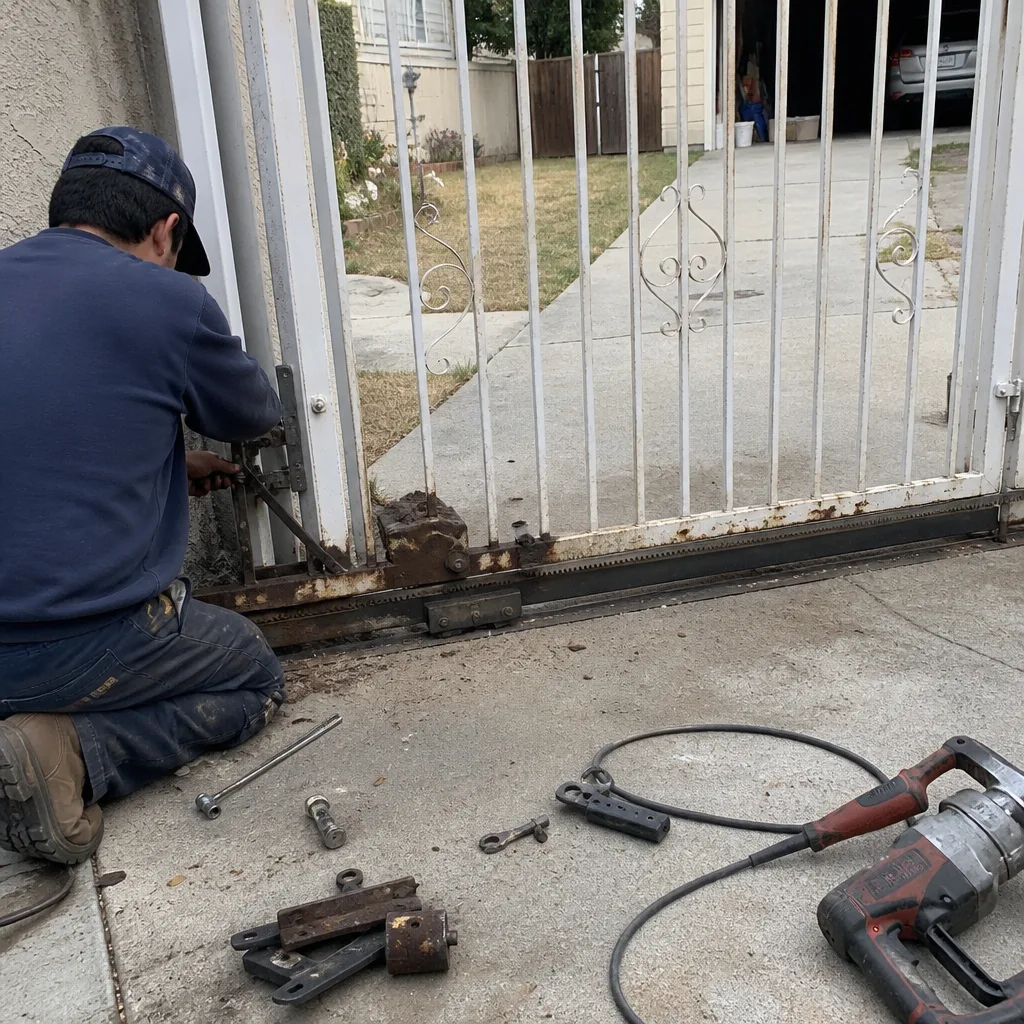 Before
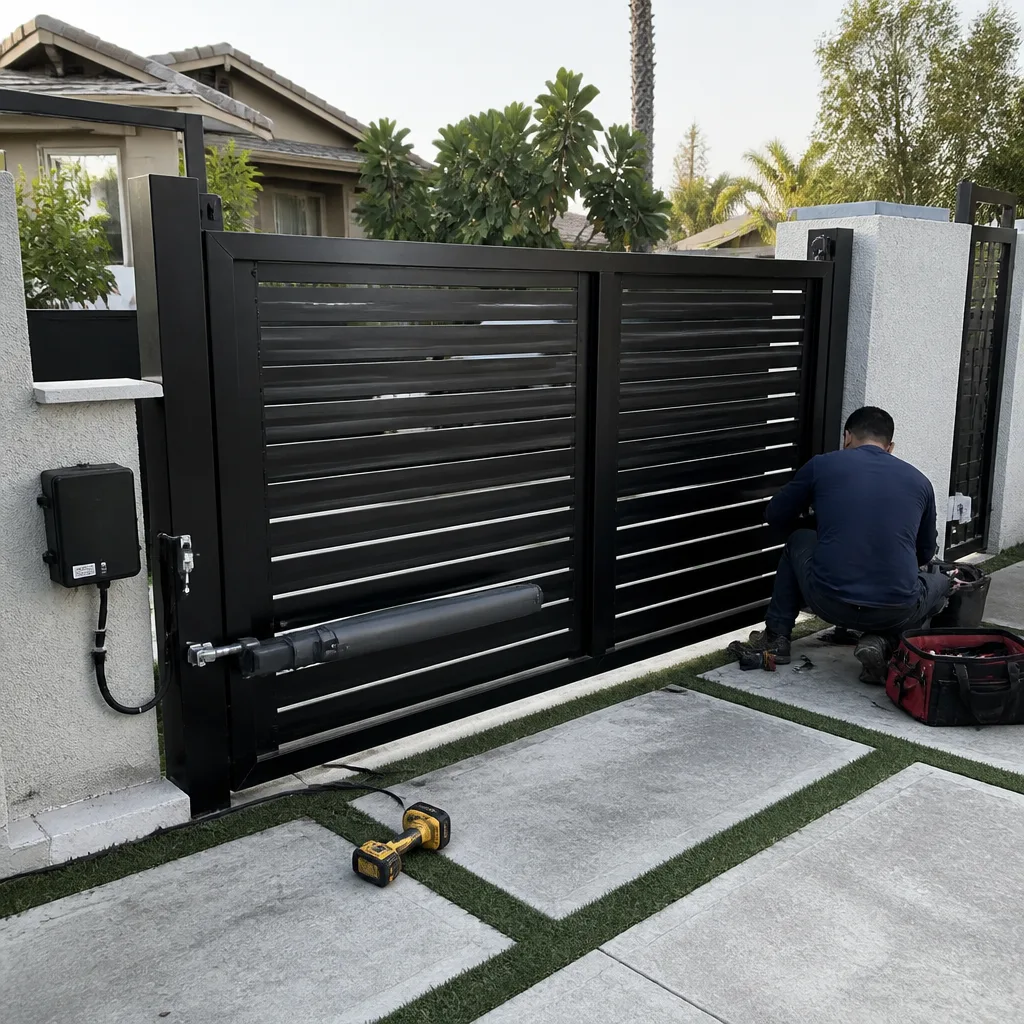 After
After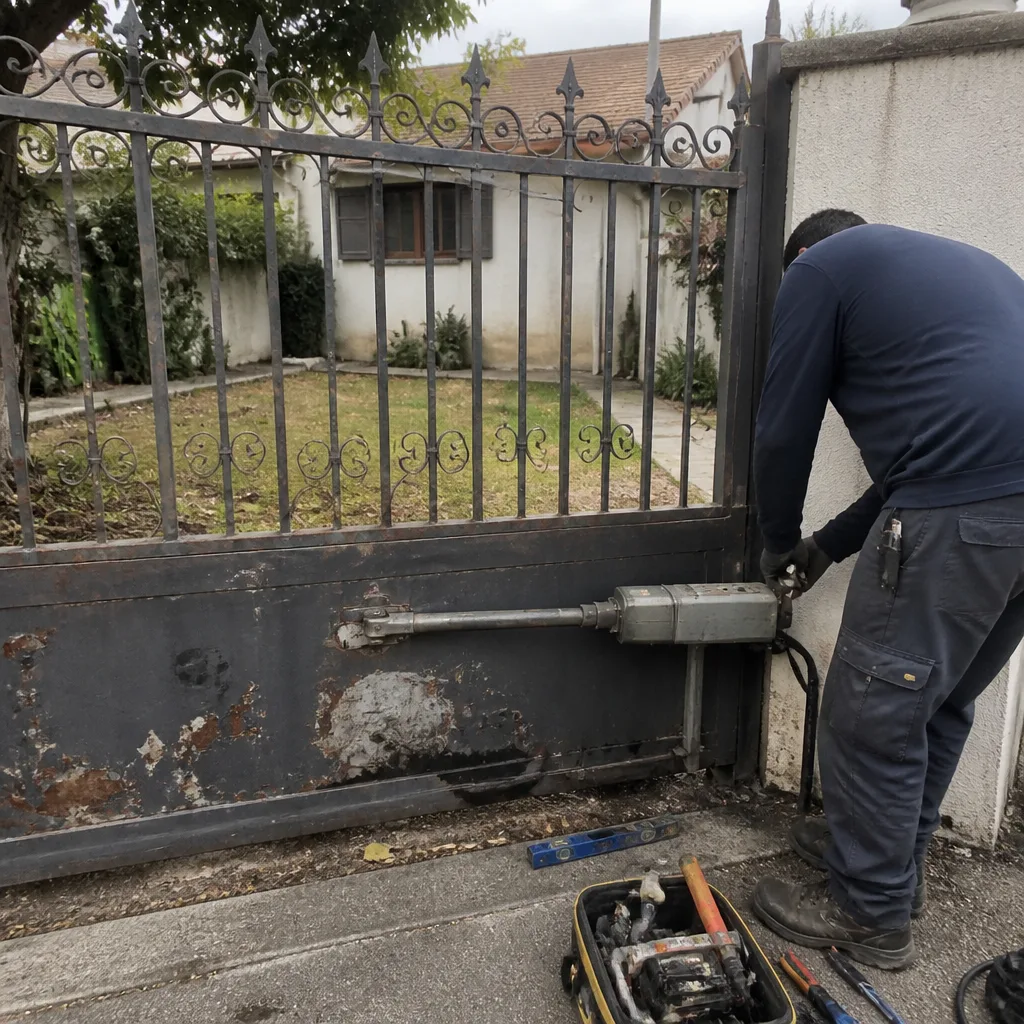 Before
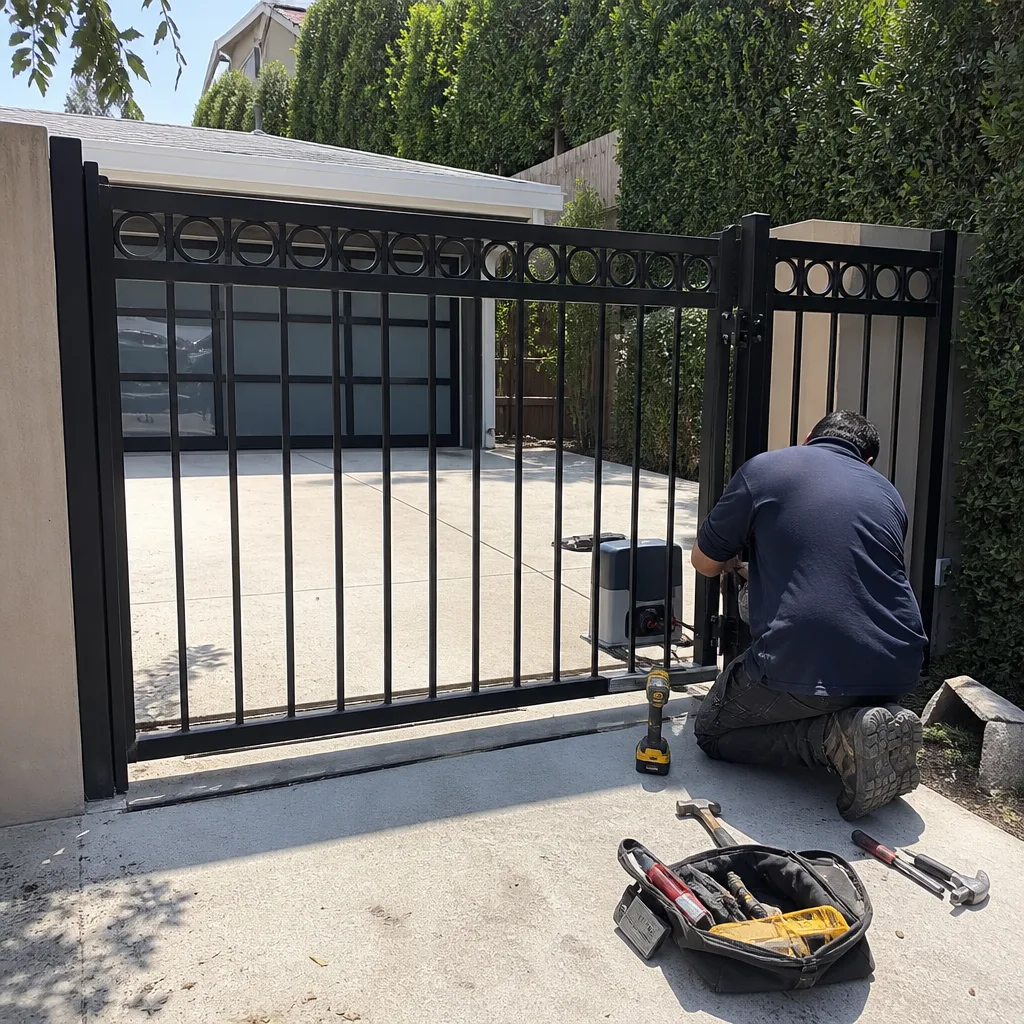 After
After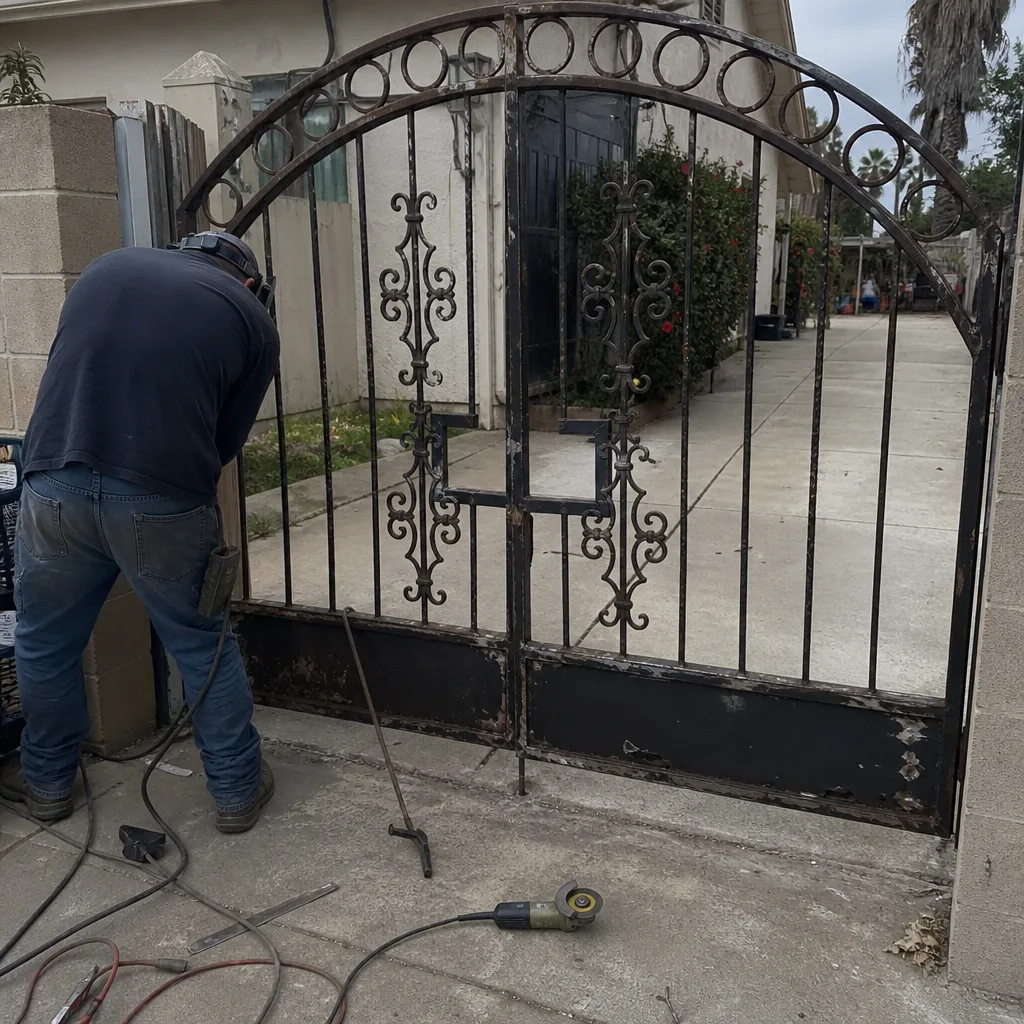 Before
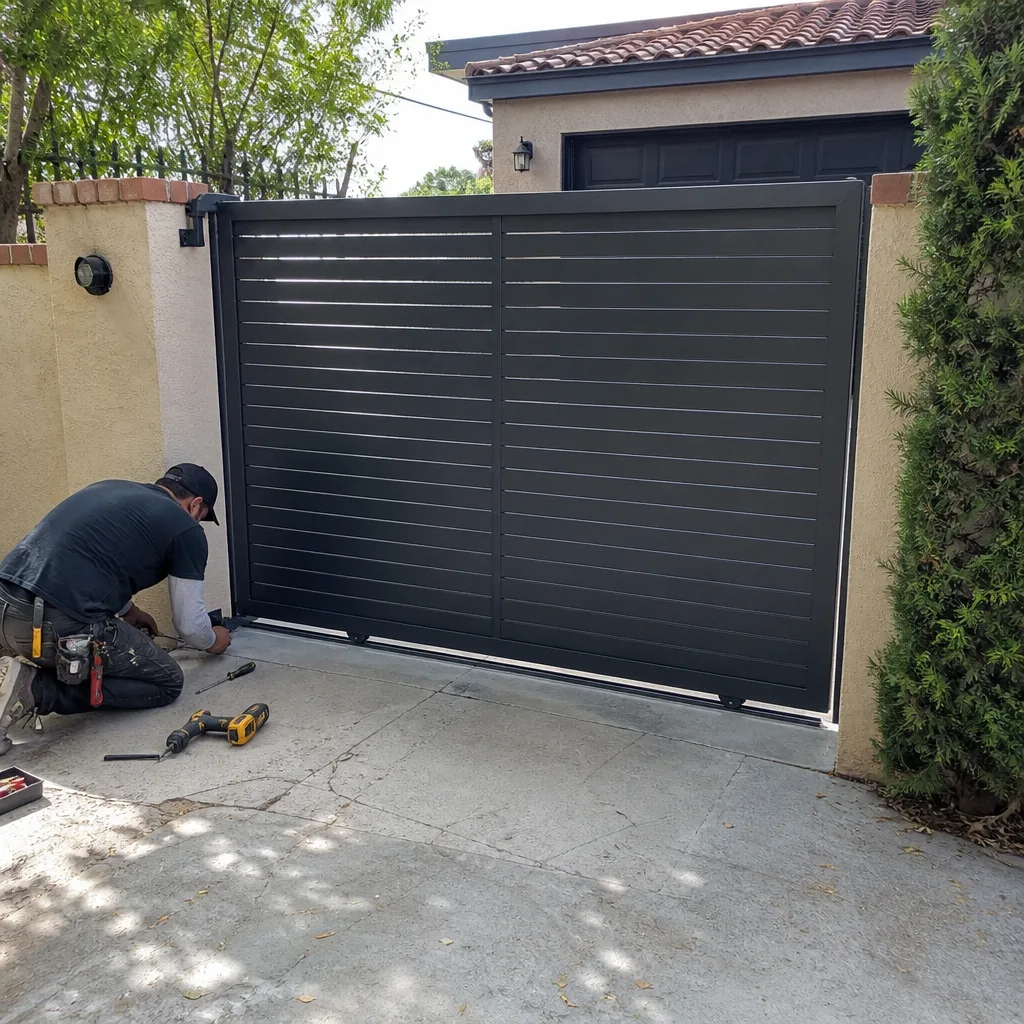 After
After